On July 16, 1994, the eve of the World Cup final, television stations broadcast The Three Tenors in concert at Los Angeles to 1.3 billion viewers across the globe. Soccer fans the world over listened with rapt attention as the triumvirate of Luciano Pavarotti, Plácido Domingo and José Carreras brewed great classical arias with timeless Hollywood classics. Most viewers, at least outside the Western hemisphere, were listening to the tenors for the first time. The music was unusual, but the powerful delivery of exquisite melodies made a compelling impression. One tenor stood out in superlative extremes. Fat and rotund, Pavarotti cut out the least handsome figure. But from deep within his massive chest emerged a distinctive, very rich timbre. The incomprehension of the lyrics was subsumed under the angelic nature of his voice. For intent listeners, Pavarotti was an otherworldly experience. Such talent occurs once in decades. It must have been god-sent. Even atheists generally bow to this incredible assertion when it comes to Pavarotti.
One realises the import of the assertion when one considers that Pavarotti's main rival, the fastidious Domingo, is among the greatest of tenors himself, outmatching Pavarotti in acting prowess, theory, rigour and repertoire. But just one aspect makes Pavarotti, Pavarotti. The voice. Even someone listening to an operatic aria for the first time can distinguish between Pavarotti's voice and that of other tenors. This cannot be said of any other tenor.
Leading the tributes to Pavarotti, who passed away on Thursday, Domingo said: "I always admired his divine voice, with its unmistakable timbre and complete vocal range." The vocal range of a tenor - the highest male voice naturally possible without the employment of falsetto - generally starts from a pitch or two below C3, covers C4 (known as middle C after its positioning roughly in the middle of a piano keyboard) and ends two octaves above in C5, called tenor C or the 'high C'. (For a soprano, the highest female singing voice, the 'high C' is two octaves above C4 at C6.)
Hitting the high C is supremely demanding. Even the best of tenors avoid venturing into such a high register without assiduous preparation. But Pavarotti glided through easily. At New York's Metropolitan Opera on February 17, 1972, in the defining moment of his career, he effortlessly and in quick succession hit nine high Cs in 'Ah! Mes Amis', the signature aria of Donizetti's 'La fille du régiment'. The challenging aria is often called the 'Mount Everest' for tenors. The Met's audience was in raptures and gave Pavarotti a 15-minute standing ovation and 10 curtain calls. A curtain call is the courteous reappearance of a performer on stage following the prolonged applause of the audience. (Incidentally, Pavarotti holds the record of most curtain calls for any artist, at 165). After the Met performance he came to be called the 'King of the High Cs'.
Pavarotti, a huge fan of Juventus football club, stormed into popular consciousness at the 1990 football World Cup final in Rome, when The Three Tenors sang the aria 'Nessun Dorma' (No One Sleeps) - the 1990 Cup anthem - from Puccini's 'Turandot'. With a delivery laden with heightened emotion, he sustained a top B through the last word 'vincero' (I will win) for 11 seconds. This, at a time when the critics had started carping and were writing him off.
For critics, Pavarotti had ceased being a great tenor by the turn of the 80s. They said he was descending into diva tantrums rather than reaching high registers. Among such tantrums was the demand he once made for a kitchen to be built into his hotel suite. More serious were his frequent last minute cancellations of appearances at sold-out venues with tickets priced as high as $1,800. Once he got into a scandal when he was caught lip-syncing at a performance.
For the rest of the world, Pavarotti the phenomenon had just begun. The Three Tenors went on to give several high voltage performances with a repertoire that included pop hits. From being an ivory tower pursuit, operatic arias were rivalling rock acts at stadiums and big open-air venues. Pavarotti went a step further, collaborating with pop star friends for charity concerts at Modena, his hometown in Italy. Such forays were not to the liking of high-minded purists, who heaped scorn and poured disdain on Pavarotti for belittling classical music. But the tenor couldn't care less. "Some say the word 'pop' is derogatory and means 'not important'- I do not accept that," Pavarotti told a British newspaper three years ago. "If the word 'classical' is the word to mean 'boring', I do not accept that either. There is (just) good and bad music," he said.
The tenor of all times
50,000 watch final curtain call for Pavarotti
MODENA (ITALY): Music and film stars joined top political figures and tens of thousands of tearful fans to honour opera legend Luciano Pavarotti at his funeral on Saturday.
About 800 family, friends and special guests heard special tributes to the venerated tenor from Pope Benedict XVI during a mass at the cathedral in his hometown of Modena. Pavarotti died on Thursday aged 71.
Among mourners were Italian Prime Minister Romano Prodi, former UN secretary general Kofi Annan, U2 rock star Bono and Italian film director Franco Zeffirelli.
Another 50,000 people watched the funeral on two giant screens set up in the main square outside the cathedral, according to Modena authorities.
Pavarotti's second wife Nicoletta Mantovani sat in front of the white maple coffin, which was covered in sunflowers, for the service. She watched in tears as the coffin was taken for a private burial in a family vault just outside Modena.
The event was virtually a state funeral. As the coffin left the cathedral, 10 planes from the Italian air force's aerobatic team flew over leaving a trail of smoke in the national colours - green, white and red.
"It's a special performance normally reserved for state funerals," team commander Massimo Tammaro said.
Recordings of Pavarotti's pristine tenor were played to the waiting crowds before the funeral service. Bulgarian soprano Raina Kabaivandska, a friend of Pavarotti, fought back tears as she started the 90 minute service with an "Ave Maria" taken from Giuseppe Verdi's "Otello".
The blind Italian singer Andrea Bocelli performed Mozart's "Ave Verum Corpus".
In a special message read at the mass, Pope Benedict XVI called Pavarotti "a great artist who through his extraordinary talent for interpretation honoured the divine gift of music."
Prodi said in a eulogy that Pavarotti "made music an instrument of life and against war" and called him an "impassioned ambassador for Italy".
More than 100,000 people had filed past Pavarotti's coffin in the cathedral in the two days before the service.
Italian President Giorgio Napolitano was among those to pay last respects on Friday.
"I wanted to testify personally to the emotion and the recognition of all Italians for the man who carried his voice and the purest image of our country throughout the world," he said.
Recordings of Puccini's "Nessun Dorma" by Pavarotti were to be played as a tribute before European Championship football matches later on Saturday, pitting Italy against France and England against Israel.
Pavarotti made the aria a new global hit when he sang it at the 1990 World Cup finals, helping to widen classical opera's appeal to the masses.
Pavarotti died at his villa near Modena after a long battle with cancer of the pancreas. He underwent major surgery for the illness in July 2006 and was hospitalised again for three weeks in August.
Tributes came from around the world to Pavarotti, including by his partners in the Three Tenors opera supergroup, Placido Domingo and Jose Carreras, though they were not at the service. Domingo said he had been held up at rehearsals in Los Angeles.
"I always admired the God-given glory of his voice -- that unmistakable special timbre from the bottom up to the very top of the tenor range," said Domingo in a statement.
Carreras added: "The best memories are the ones in intimacy. ... We have to remember him as the great artist he was, a man with such a wonderful charismatic personality."
Pavarotti broke into the opera world when he won a competition in 1961. He sang "Nessun Dorma" during his last major performance, at the opening of the Winter Olympics in Turin in February 2006.
He also managed to shock purists with his appearances in live concerts, sometimes alongside pop musicians. In 1991 a crowd of 150,000, including the Prince and Princess of Wales, braved the rain and cold in London's Hyde Park to hear him sing 20 arias by Verdi, Puccini, Bizet and Wagner.
Over the years he topped the British pop charts and appeared with rock stars ranging from Elton John and Eric Clapton to Bono, Zucchero and even the Spice Girls. Many of the concerts were for charity to raise money for causes such as children in Bosnia-Hercegovina.
Thousands pay respects to Pavarotti lying in state at Modena cathedral
MODENA: Recordings of Luciano Pavarotti's voice boomed out in Modena's main piazza on Saturday as mourners waited to pay their final respects to the tenor before an invitation-only funeral in his hometown's cathedral.
Some well-wishers waited under the large loudspeakers erected in Piazza Grande, arms crossed and eyes closed as they listened to the voice that was as much at home on stage with rock stars as it was in the world's great opera houses.
Pavarotti's body, dressed in a black tuxedo and with his hands clutching his trademark white handkerchief, went back on view at dawn on Saturday. The cathedral was to remain open to the public until just before the mid-afternoon start of the funeral service, which was being celebrated by the Vatican's No. 2 official and televised live.
“He was our Italian flag. He was the best representation that we could have,'' said Susy Cavallini, a 43-year-old Modena resident as she emerged from the cathedral.
“Modena is known for its cappelletti (a type of tortellini), balsamic vinegar, Ferrari and Pavarotti. It's a collection of important things that Modena has given to the world.''
Admirers signed a book of condolences placed by a vase of sunflowers- Pavarotti's favorite- outside the cathedral. The Foreign Ministry said similar books of condolences would be available to well-wishers around the world at Italian embassies and consulates.
The opera great died on Thursday in his home on Modena's outskirts after battling pancreatic cancer for more than a year. He was 71 and was beloved by generations of opera-goers and pop fans, for his breathtaking high “Cs'' and his hearty renditions of folk songs like “ O Sole Mio ,'' and popular tunes like “ My Way .''
Choir Jokes
Each voice part sings in a different range, and each one has a very different personality. You may ask, "Why should singing different notes make people act differently?", and indeed this is a mysterious question and has not been adequately studied, especially since scientists who study musicians tend to be musicians themselves and have all the peculiar complexes that go with being tenors, french horn players, timpanists, or whatever. However, this is beside the point; the fact remains that the four voice parts can be easily distinguished, and I will now explain how.
THE SOPRANOS are the ones who sing the highest, and because of this they think they rule the world. They have longer hair, fancier jewelry, and swishier skirts than anyone else, and they consider themselves insulted if they are not allowed to go at least to a high F in every movement of any given piece. When they reach the high notes, they hold them for at least half again as long as the composer and/or conductor requires, and then complain that their throats are killing them and that the composer and conductor are sadists. Sopranos have varied attitudes toward the other sections of the chorus, though they consider all of them inferior. Altos are to sopranos rather like second violins to first violins - nice to harmonize with, but not really necessary. All sopranos have a secret feeling that the altos could drop out and the piece would sound essentially the same, and they don't understand why anybody would sing in that range in the first place - it's so boring. Tenors, on the other hand, can be very nice to have around; besides their flirtation possibilities (it is a well-known fact that sopranos never flirt with basses), sopranos like to sing duets with tenors because all the tenors are doing is working very hard to sing in a low-to-medium soprano range, while the sopranos are up there in the stratosphere showing off. To sopranos, basses are the scum of the earth - they sing too damn loud, are useless to tune to because they're down in that low, low range - and there has to be something wrong with anyone who sings in the F clef, anyway.
THE ALTOS are the salt of the earth - in their opinion, at least. Altos are unassuming people, who would wear jeans to concerts if they were allowed to. Altos are in a unique position in the chorus in that they are unable to complain about having to sing either very high or very low, and they know that all the other sections think their parts are pitifully easy. But the altos know otherwise. They know that while the sopranos are screeching away on a high A, they are being forced to sing elaborate passages full of sharps and flats and tricks of rhythm, and nobody is noticing because the sopranos are singing too loud (and the basses usually are too). Altos get a deep, secret pleasure out of conspiring together to tune the sopranos flat. Altos have an innate distrust of tenors, because the tenors sing in almost the same range and think they sound better. They like the basses, and enjoy singing duets with them - the basses just sound like a rumble anyway, and it's the only time the altos can really be heard. Altos' other complaint is that there are always too many of them and so they never get to sing really loud.
THE TENORS are spoiled. That's all there is to it. For one thing, there are never enough of them, and choir directors would rather sell their souls than let a halfway decent tenor quit, while they're always ready to unload a few altos at half price. And then, for some reason, the few tenors there are are always really good - it's one of those annoying facts of life.. So it's no wonder that tenors always get swollen heads - after all, who else can make sopranos swoon? The one thing that can make tenors insecure is the accusation (usually by the basses) that anyone singing that high couldn't possibly be a real man.. In their usual perverse fashion, the tenors never acknowledge this, but just complain louder about the composer being a sadist and making them sing so damn high. Tenors have a love-hate relationship with the conductor, too, because the conductor is always telling them to sing louder because there are so few of them. No conductor in recorded history has ever asked for less tenor in a forte passage. Tenors feel threatened in some way by all the other sections - the sopranos because they can hit those incredibly high notes; the altos because they have no trouble singing the notes the tenors kill themselves for; and the basses because, although they can't sing anything above an E, they sing it loud enough to drown the tenors out. Of course, the tenors would rather die than admit any of this. It is a little-known fact that tenors move their eyebrows more than anyone else while singing.
THE BASSES sing the lowest of anybody. This basically explains everything. They are stolid, dependable people, and have more facial hair than anybody else. The basses feel perpetually unappreciated, but they have a deep conviction that they are actually the most important part (a view endorsed by musicologists, but certainly not by sopranos or tenors), despite the fact that they have the most boring part of anybody and often sing the same note (or in endless fifths) for an entire page. They compensate for this by singing as loudly as they can get away with - most basses are tuba players at heart. Basses are the only section that can regularly complain about how low their part is, and they make horrible faces when trying to hit very low notes. Basses are charitable people, but their charity does not extend so far as tenors, whom they consider effete poseurs. Basses hate tuning the tenors more than almost anything else. Basses like altos - except when they have duets and the altos get the good part. As for the sopranos, they are simply in an alternate universe which the basses don't understand at all. They can't imagine why anybody would ever want to sing that high and sound that bad when they make mistakes. When a bass makes a mistake, the other three parts will cover him, and he can continue on his merry way, knowing that sometime, somehow, he will end up at the root of the chord.
Farewell to Pavarotti
 Ledendary Italian tenor Luciano Pavarotti, who brought opera to the masses, succumbs to pancreatic cancer aged 71 at his home in Modena; survived by wife and 4-yr-old daughter.
Modena, Italy: Luciano Pavarotti, legendary Italian opera star hailed by many as the greatest tenor of his generation, died on Thursday after a long battle with cancer, his manager Terri Robson said.
“The great tenor Luciano Pavarotti died on Wednesday, 11 pm EDT at his home in Modena,” Robson said in a statement. He was 71.
“The maestro fought a long, tough battle against pancreatic cancer which eventually took his life.
“In fitting with the approach that characterised his life and work, he remained positive until finally succumbing to the last stages of his illness.”
The rotund, black-bearded tenor known as “Big Luciano” helped bring opera to the masses and performed to vast stadium audiences round the world. He shot to fame with a stand-in appearance at London’s Covent Garden in 1963 and soon had critics gushing about his voluminous voice.
His last public singing performance was at the opening ceremony of the Winter Olympics in Turin in February 2006, singing Puccini’s aria “Nessun Dorma”.
In July last year, Pavarotti underwent surgery in New York for pancreatic cancer and retreated to his villa in Modena. He had to cancel his first planned public reappearance a few months later.
Pavarotti was taken to a hospital in Modena last month and treated for more than two weeks. He was released on August 25, and spent his final hours at home with family and friends nearby, the statement said.
“He remained optimistic and confident that he would overcome the disease and had been determined to return to the stage to complete his Worldwide Farewell Tour,” the statement said.
He is survived by his wife, Nicoletta, their 4-year-old daughter, Alice, as well as three daughters from Pavarotti’s first marriage.
The news saddened Italians, particularly those in Modena, Pavarotti’s hometown. Police stood watch outside Pavarotti’s villa as television crews gathered.
“For Modena, it is a enormous loss. Modena is known to the world thanks to Pavarotti,” said Antonio Dibiccari, 39.

Pavarotti with wife Nicoletta Mantovani and their 11-month-old daughter Alice in 2003
Key dates in Luciano Pavarotti’s life
• October 12, 1935: Pavarotti is born in Modena, Italy.
• 1961: Wins a local competition and with it a debut as Rodolfo in Puccini’s “La Boheme”, in Reggio Emilia city. Marries Adua Veroni, with whom he has three daughters.
• 1963: First UK appearance at Covent Garden in London, where he stands in for tenor Giuseppe Di Stefano.
• 1972: Records nine high Cs at New York’s Metropolitan Opera House.
• 1990: Performs at the closing ceremony of the World Cup Football in Italy with fellow tenors Placido Domingo and Jose Carreras.
• 1991: Serenades Princess Diana at London’s Hyde Park in one of the biggest music events at the park.
• 2001: Appears in a court in Italy on charges of 13.3 million of taxes.
• 2003: Marries his 33-year-old former personal assistant Nicoletta Mantovani.
• 2006: His final vocal performance at the opening ceremony of the 20th Winter Olympics in Turin.
• 8 August, 2007: Admitted to hospital in Modena with fever, but stays on to have more tests related to pancreatic cancer. Discharged on August 25.
• 6 September, 2007: Opera legend dies aged 71.
TRIBUTES TO THE TENOR
There were tenors, and then there was Pavarotti - Italian film director Franco Zeffirelli
Pavarotti was the best known classical singer in the world, the best incarnation of the great popular tenor since Enrico Caruso. His artistic qualities, his warmth and his charisma seduced the whole world. - French President Nicolas Sarkozy
What is overtone singing?
Vocal overtone techniques often seem mysterious partly because their effects are so extraordinary. Researchers have found that harmonic overtone singers use their mouth/throat anatomy to create interconnected but distinct resonating chambers of varying sizes and shapes that alter the loudness and distribution of harmonics. Thus, much of Spectral Voices' music involves sculpting internal spaces to interact with external spaces.
To learn more about specific harmonic singing techniques and get a mini-lesson, click here.
Origin of Spectral Voices
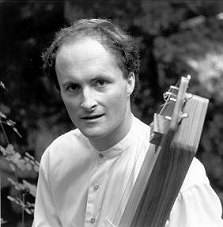 In 1991 Jim Cole began practicing overtone singing after hearing recordings of the Tibetan Gyuto monks and David Hykes and the Harmonic Choir's Hearing Solar Winds. He was astonished and fascinated to discover the haunting otherworldly sounds he heard were produced entirely by human voices. Within a year he was turning people on to the wonder of harmonic singing, teaching others as he continued to learn, and gathering an ever-changing group around him. Asian throat singing was never really a public art, developed instead by solitary wandering herders communing with nature and by monks deep in meditation. Jim's group likewise experienced the focus and peace that can come from harmonic singing. Members enjoyed the shared opportunity for musical exploration, self-expression, and interaction with each other, but originally had no intention of singing for anyone but themselves. As the group evolved into Spectral Voices, the singers became increasingly experimental, playing with their voices to create new sounds and techniques and discovering the challenges and joys of totally improvised group work.
 Background and Influences
 For centuries people in many parts of the world have developed overtone singing traditions (khoomei - throat singing, harmonic singing, overtoning, harmonic chant, subfundamental chant, multiphonic singing, vocal fry, etc), and nowhere has it reached greater refinement than in central Asia. You may have heard the high whistling melodies, expressive warbles, and intense low croaking tones of Tuvan throat singers. A similar folk tradition occurs among the herdsmen of Mongolia. Certain groups of Tibetan Buddhist monks practice a deep subfundamental type of sacred harmonic chant.
 Hitting the right note is genetic: scientists
 Reuters
Only 1 in 10,000 people have perfect or absolute pitch – the uncanny ability to name the note of just about any sound without the help of a reference tone.
“One guy said, ‘I can name the pitch of anything – even farts’,” said Dr Jane Gitschier of the University of California, San Francisco, whose study appears in the journal Proceedings of the National Academy of Sciences.
She and colleagues analysed the results of a three-year, Web-based survey and musical test that required participants to identify notes without the help of a reference tone. More than 2,200 people completed the 20-minute test.
“We noticed that pitch-naming ability was roughly an all-or-nothing phenomenon,” she said.
Based on this, the researchers concluded that one gene, or perhaps a few, may be behind this talent.
Gitschier said those with perfect pitch were able to correctly identify both piano tones and pure computer-generated tones that were devoid of the distinctive sounds of any musical instrument.
She said people with perfect pitch were able to pick out the pure tones with ease. And they also tended to have had early musical training – before the age of 7.
“We think it probably takes the two things,” she said.
They also found that perfect pitch tends to deteriorate with age.
“As people get older, their perception goes sharp. If a note C is played, and they’re 15, they will say it’s a C. But if they’re 50, they might say it’s a C sharp,” Gitschier said. “This can be very disconcerting for them.”
The most commonly misidentified note, based on the study, is a G sharp. That may be because G sharp is overshadowed by A, its neighbour on the scale, they said.
A is often used by orchestras in the West as a tuning reference.
Gitschier said she and her colleagues were focusing on identifying the gene responsible for perfect pitch, which will involve gene mapping. Then they will try to figure out what is different in people with absolute pitch.
“We’ll have to play it by ear, so to speak,” she said.
Absolute Pitch
Chicago: Musicians and singers work for years to develop their sense of pitch, but few can name a musical note without a reference tone. US researchers on Monday said one gene may be the key to that coveted ability.
Only 1 in 10,000 people have perfect or absolute pitch – the uncanny ability to name the note of just about any sound without the help of a reference tone.
“One guy said, ‘I can name the pitch of anything – even farts’,” said Dr Jane Gitschier of the University of California, San Francisco, whose study appears in the journal Proceedings of the National Academy of Sciences.
She and colleagues analysed the results of a three-year, Web-based survey and musical test that required participants to identify notes without the help of a reference tone. More than 2,200 people completed the 20-minute test.
“We noticed that pitch-naming ability was roughly an all-or-nothing phenomenon,” she said.
Based on this, the researchers concluded that one gene, or perhaps a few, may be behind this talent.
Gitschier said those with perfect pitch were able to correctly identify both piano tones and pure computer-generated tones that were devoid of the distinctive sounds of any musical instrument.
She said people with perfect pitch were able to pick out the pure tones with ease. And they also tended to have had early musical training – before the age of 7.
“We think it probably takes the two things,” she said.
They also found that perfect pitch tends to deteriorate with age.
“As people get older, their perception goes sharp. If a note C is played, and they’re 15, they will say it’s a C. But if they’re 50, they might say it’s a C sharp,” Gitschier said. “This can be very disconcerting for them.”
The most commonly misidentified note, based on the study, is a G sharp. That may be because G sharp is overshadowed by A, its neighbour on the scale, they said.
A is often used by orchestras in the West as a tuning reference.
Gitschier said she and her colleagues were focusing on identifying the gene responsible for perfect pitch, which will involve gene mapping. Then they will try to figure out what is different in people with absolute pitch.
“We’ll have to play it by ear, so to speak,” she said.


